-
Who this checklist is for
-
Step 1: Get technical requirements in writing—before you contact a single vendor
-
Step 2: Verify the vendor can produce a proper invoice and compliance documents
-
Step 3: Request a demo or sample part—not just a spec sheet
-
Step 4: Confirm delivery timeline and penalty clauses in writing
-
Step 5: Check the total cost of ownership, not just the purchase price
-
Step 6: Get the training and onboarding plan in writing
-
Step 7: Run a pre-acceptance inspection
-
Step 8: Document everything
-
Common mistakes to avoid
Who this checklist is for
This is for anyone responsible for purchasing industrial manufacturing equipment—specifically 3D printers and laser cutting machines—when you're not the technical end user. Maybe you're an office manager, procurement coordinator, or operations admin. You handle the vendor relationship, the paperwork, and the budget. The engineers tell you what they want, but you're the one who has to make sure it actually arrives, works, and doesn't blow up the quarterly numbers.
I've managed over 80 equipment and service orders in the past 5 years. Here's the process I wish I'd had from day one.
Step 1: Get technical requirements in writing—before you contact a single vendor
I learned this the hard way. In early 2023, I ordered what I thought was the right spec for a repeat job. The engineer told me "same as last time." I assumed that meant identical to the previous order. Didn't verify. Turned out the previous vendor had slightly different interpretations of what sounded like the same material.
Now I don't place any order without a written spec sheet signed off by the end user. This matters even more for equipment like an industrial 3D printer or a laser cutter, where a single spec change can mean a 30% price difference.
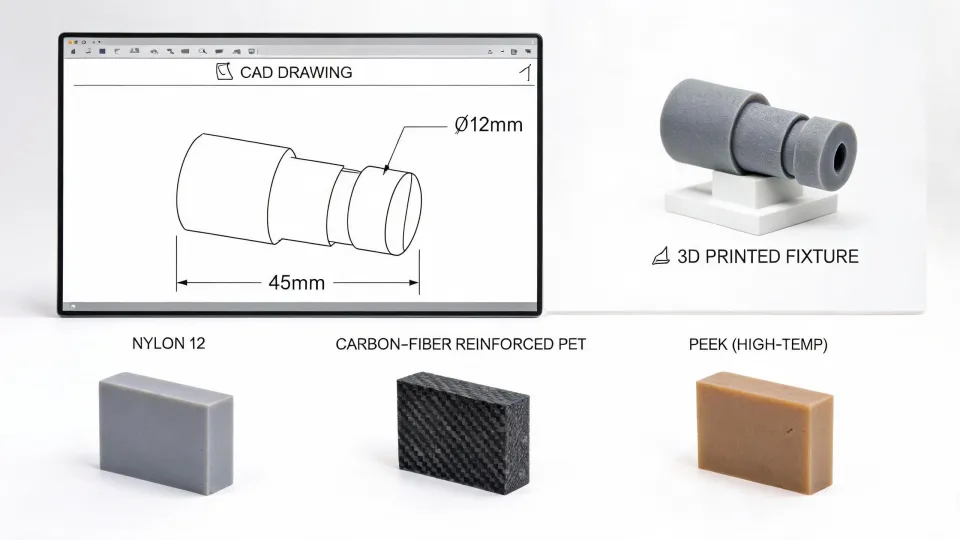
For 3D printers: ask specifically about print volume, material compatibility (carbon fiber, metal, composites), and whether the system needs a dedicated operator. If you're looking at something like the Markforged Onyx One 3D printer, confirm the material specs and whether it fits your existing workflow. For metal 3D printers, ask about post-processing requirements—they're not plug-and-play.
For laser cutting: the CO2 vs fiber laser cutting question is the first decision point. CO2 lasers work well for non-metals (glass, acrylic, wood). Fiber lasers are better for metals. If your team needs to cut sheet metal, a fiber laser is probably the right call. If they're working with glass or organics, CO2 is likely the better fit. Get the end user to confirm which materials they actually need to process.
Step 2: Verify the vendor can produce a proper invoice and compliance documents
This sounds basic. It's not. I once found a great price from a new vendor—$2,100 cheaper than our regular supplier. Ordered the equipment. They couldn't provide a proper invoice (handwritten receipt only). Finance rejected the expense report. I ate $2,100 out of the department budget.
Now I verify invoicing capability before placing any order. For equipment purchases, also ask about:
- Warranty terms in writing
- Service contract options
- Compliance certifications relevant to your industry (ISO, CE, etc.)
- Whether they can provide a formal quote with line-item pricing
For something like a Markforged metal 3D printer, also ask about the material supply chain. If the printer uses proprietary metal filaments, you need to know the pricing and lead time on consumables before you commit. Same goes for carbon fiber systems—consumable lock-in is a real cost factor.
Step 3: Request a demo or sample part—not just a spec sheet
Everyone told me to always request a physical sample before approving a purchase. I only believed it after skipping that step once and receiving a laser-cut batch that looked nothing like what the vendor showed in the brochure.
The photo showed clean edges. The parts we received had burn marks and inconsistent kerf widths. The vendor's response: "Oh, that's normal for that material." Not acceptable for our application.
For 3D printers: request a sample part made with your intended material and geometry. For laser cutters: send them a test file and ask for a sample cut on the actual material you'll be using. If they can't do this, that's a red flag.
Step 4: Confirm delivery timeline and penalty clauses in writing
This is where the time certainty premium comes in. In March 2024, we needed a piece of equipment for a production run starting in 6 weeks. Vendor A quoted $58,000 and "roughly 4–6 weeks delivery." Vendor B quoted $61,000 with a guaranteed 4-week delivery, backed by a penalty clause: $500/day for every day late.
We went with Vendor B. The equipment arrived in 27 days. The $3,000 premium bought us certainty, not just speed. If we'd missed that production window, the delay would have cost roughly $15,000 in overtime and rescheduling.
After getting burned twice by "probably on time" promises, we now budget for guaranteed delivery on any time-sensitive purchase. It's not always necessary—for non-urgent equipment, standard lead times are fine. But when the deadline is real, ask for a written delivery guarantee with financial consequences for the vendor.
Step 5: Check the total cost of ownership, not just the purchase price
I assumed "purchase price" was the main number to compare. Didn't verify the ongoing costs. Turned out the cheaper machine needed proprietary consumables that cost 40% more per year than the alternative.
For 3D printers, ask about: material costs per part, maintenance intervals, replacement part pricing, and service contract costs. A machine that's $10,000 cheaper up front can easily cost more over 3 years.
For laser cutters: ask about lens replacement costs, gas consumption (for CO2 systems), and power draw. A fiber laser cutting machine typically has lower operating costs for laser cutting machine sheet metal applications than a CO2 system, but the up-front price is higher. Run the math over your expected usage volume.
Step 6: Get the training and onboarding plan in writing
We didn't have a formal onboarding process for new equipment. Cost us when the vendor delivered the machine, left a manual, and disappeared—and the operator spent 3 weeks figuring out basic operations.
The third time this happened, I finally created a simple checklist: before signing the purchase order, confirm the vendor will provide on-site training, a remote support channel, and a written SOP template. Most vendors do this. The good ones document it in the contract.
Step 7: Run a pre-acceptance inspection
I assumed the equipment would arrive in working condition. Didn't verify the installation checklist. Turned out the laser alignment was off by 2mm on a CNC laser glass cutting machine—within the vendor's "tolerance," but outside our requirements.
Now we do a pre-acceptance inspection before signing off on final payment. This means running a test part, checking against the agreed specs, and documenting any deviations. If the vendor can't meet spec at acceptance, you have leverage—payment is still on the table.
Step 8: Document everything
This is the step most people skip. Keep the quotes, the emails, the sample approvals, the acceptance test results—all of it. If there's a dispute 6 months in, you'll need the paper trail.
I keep a simple folder for every equipment purchase: quote, PO, delivery confirmation, acceptance test results, invoice, and warranty. It's saved me twice in the past 3 years.
Common mistakes to avoid
A few things I've learned to watch for:
- Assuming "same specs" means identical results across vendors. Verify with samples.
- Skipping the invoice check on new vendors. Always verify before ordering.
- Accepting vague delivery timelines on time-sensitive purchases. Get a written guarantee with penalties.
- Forgetting to budget for consumables and maintenance. The purchase price is not the total cost.
- Skipping the pre-acceptance inspection. Test the equipment before you close the PO.
None of this is complicated. It's just a matter of doing the checks before you commit the budget.