-
1. Is the Ultimaker S6 3D printer real? Should I wait for it?
-
2. Ultimaker 2 specs: is the Ultimaker 2+ still worth buying in 2025?
-
3. Are filament 3D printers toxic? Should I worry about one in my office?
-
4. How much does an Ultimaker really cost to own?
-
5. Can I use cheap third-party filament in an Ultimaker?
-
6. What was your most expensive Ultimaker mistake?
-
7. Ultimaker S3 vs S5 vs S7: which should you choose?
-
8. Can an Ultimaker replace traditional manufacturing?
People ask me a lot of the same questions about Ultimaker printers. Most of them are questions I wish I'd asked before buying my first machine—instead of after the second failed production run. I've been handling FDM 3D printing orders for six years (since 2019), and I've personally made and documented 14 significant mistakes, totaling roughly $30,000 in wasted budget. Now I maintain our team's checklist so newer engineers don't repeat them. Here are the questions, answered the way I'd answer them across a workbench—including the parts that cost me money to learn.
The short version of what's below:
- Is the Ultimaker S6 real?
- Are Ultimaker 2 specs still competitive?
- Do filament 3D printers make the air unhealthy?
- What does an Ultimaker actually cost to own?
- Can I use cheap third-party filament?
- What was the most expensive mistake I made?
- Which S-series model should you buy?
- Can FDM replace traditional manufacturing?
1. Is the Ultimaker S6 3D printer real? Should I wait for it?
I tried to answer this myself in late 2024 and lost about four months—maybe five, I'd have to check the invoice dates—waiting for something that never shipped. What I found: patent filings, forum threads, and a persistent rumor that UltiMaker had an "S6" in development. But as of January 2025, I can't point to an official release, and the S-series models you can actually buy are the S3, S5, and S7. I held off replacing a dying S3 because I was sure the S6 was imminent. It wasn't. The delay cost me roughly $1,100 in expedited production at another shop, plus weeks of missed deadlines. If you need a machine now, buy what's actually on the market now. Waiting for a rumored model has a real cost. For the same reason, I don't trust third-party "release date" posts—check UltiMaker's official product page if you want a reliable answer.
2. Ultimaker 2 specs: is the Ultimaker 2+ still worth buying in 2025?
This is still a question I get from hobbyists and small shops. Here are the specs that matter: build volume 223 x 223 x 205 mm, layer resolution down to 20 microns, a 0.4 mm nozzle, and a heated bed that reaches 100°C. It uses 2.85 mm filament—that matters if you're building a materials library around the more common 1.75 mm standard. Ultimaker's official spec sheet also lists "up to 300 mm/s" print speed. Treat that number as marketing. In real production, with real tolerances, I run 30–60 mm/s—or rather, 25–50 for tricky geometries. Now the harder question: should you buy a used Ultimaker 2 in 2025? Only if you can verify its history. I've seen two used units where repairs exceeded the asking price. Actually, three, if you count the parts machine still sitting on my shelf. Replacement parts for an old machine add up, and that changes the total cost calculation fast.
3. Are filament 3D printers toxic? Should I worry about one in my office?
This is a real concern, and I'm glad people ask—I wish more did. The short answer: FDM 3D printing does release ultrafine particles and volatile organic compounds. A widely cited 2016 study in Environmental Science & Technology measured emissions from desktop FDM printers and found that every filament tested, including PLA, emitted particles. ABS and nylon are worse; ABS in particular can release styrene. So "non-toxic filament" is not the same as "emits nothing." What does this mean practically? I don't run open-frame printers in unventilated office space. My Ultimaker S5 has an enclosed build chamber and an active carbon filter, and I replace the filter on schedule—though I forgot last spring, and the replacement lead time was two weeks. The answer isn't panic; it's ventilation plus filtration. I also stopped eating near the machines and started logging filter changes. Small habits, but they cost nothing compared to the alternative.
4. How much does an Ultimaker really cost to own?
Upfront price is what most buyers compare. I've stopped doing that. Total cost of ownership (i.e., not just the unit price but materials, maintenance, downtime, and your own labor) is the number that actually matters. My S5's real cost breakdown includes: the machine, roughly $80–120 per month in materials, a few hundred dollars a year in print cores and build plate sheets, and the occasional failed 30-hour print.
The cheapest printer I ever bought was an open-frame model at $800. Over 18 months, that machine cost me an estimated $1,700 in failed prints and replacement parts, plus about 30 hours of my own time. By a conservative shop rate, its real total was around $4,200. The S5 cost more upfront, but divided over three years of dependable work, it costs less per successful part. I now write down every cost for the first six months before comparing any vendor quotes. At least, that's been my experience running a small service bureau.
The lowest quoted price is often not the lowest total cost.
5. Can I use cheap third-party filament in an Ultimaker?
I've been on both sides of this one. The honest answer: yes, you can run third-party 2.85 mm filament in an Ultimaker, and I do for some prototyping jobs. But I learned the hard way that "compatible" doesn't mean "identical." A supplier told me their PLA was Ultimaker-compatible. It fed fine for the first few hours. Then it jammed in the Bowden tube, and I found the filament diameter fluctuated between 2.8 and 3.0 mm within one spool. That spool cost me three failed prints, $60 in wasted material, and a day of machine time. My rule now: for production work, I use material profiles that are documented and reproducible. For prototyping, I'll try cheaper filament—but I run a full calibration test first and weigh the spool before installing it. The $18 savings per spool stops mattering once you calculate the total cost of a jammed hotend. That said, there are good third-party brands; just test like the machine's hour meter depends on it, because it does.
6. What was your most expensive Ultimaker mistake?
My most expensive single mistake happened in September 2022. I approved a 35-piece production order and set the print speed to 120 mm/s because I was behind schedule. The first few hours looked fine. By the end of the run, every single part had layer shift and stringing. I'd skipped a test print with the bulk material—or rather, I assumed the profile I'd tuned for another filament would carry over to a new spool. It didn't. That error cost about $890 in material and wasted machine time, straight to the recycling bin, plus a one-week delay that cost me two regular clients' next orders. After the second time a similar thing happened with material settings, I created a pre-check checklist: material verification, calibration print, speed settings written down, and a sign-off step. We've caught 47 potential errors using that checklist in the past 18 months. It should have existed before the 35-piece incident (note to self: I still owe the team a shared version of that document).
7. Ultimaker S3 vs S5 vs S7: which should you choose?
It depends on your parts. The S3's build volume is 230 x 190 x 200 mm, which handles machining fixtures and small production parts. The S5 gives you 330 x 240 x 300 mm—more height, fewer split-part designs, less puzzle-solving. My own upgrade path was S3 to S5, and I went back and forth for two weeks. On paper, the S3 covered 80% of my parts. But my gut said the extra Z-height would matter, and within a month I was printing a fixture that needed 280 mm. Gut wins this time—but that's not a purchasing strategy. The S7 is the current flagship, and I haven't run one yet (note to self: really should arrange a demo). What I tell clients: the machine is only one line in the total cost equation. Software, material profiles, training, and reliability are the rest. An S3 that's set up right will outperform an S7 that's misconfigured for the job. Buy for the largest part you actually expect to produce, not for the upgrade that looks nice on paper.
8. Can an Ultimaker replace traditional manufacturing?
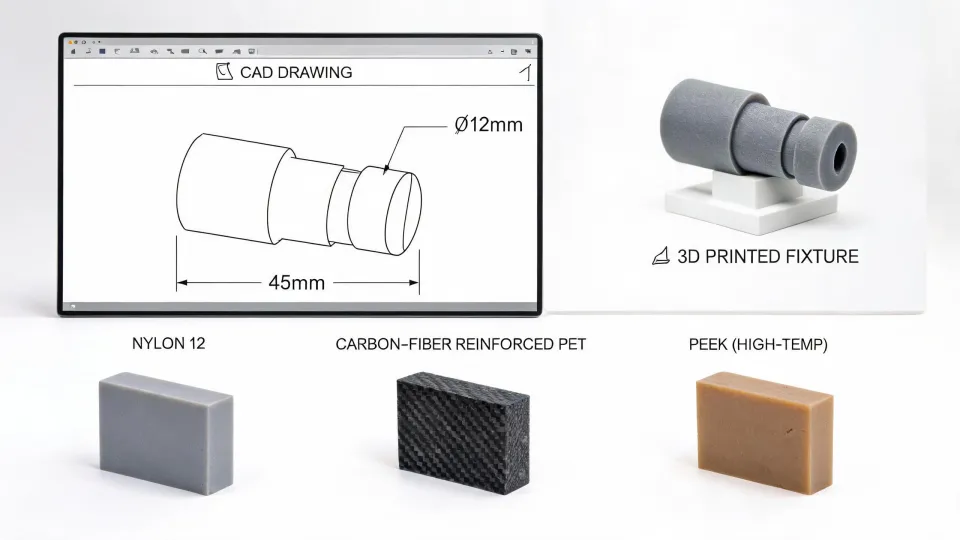
Short answer: no—and be skeptical of anyone selling that story. My shop uses Ultimakers for low-volume production, jigs, fixtures, and prototyping. Those parts would cost more and take longer to machine. But once you need hundreds of identical pieces from a stable material, injection molding or CNC wins on price per unit. At least, that's been my experience over six years. FDM's advantage is flexibility: no molds, no setup cost, and the ability to iterate overnight. That's genuinely valuable for the right jobs. Pretending it replaces all manufacturing leads to bad projects, wasted budget, and clients who learn to distrust the technology. That's the same logic as total cost thinking: match the process to the actual job and count the real costs. If someone asks me whether an Ultimaker is the right machine, my first question is always, "What are you actually making, and how many of them?"
