-
If you're comparing Ultimaker 3D printers, here's my short answer: the Ultimaker S5 is worth the price, and I have a $1,200 failure to prove it.
-
Why I decided to write this
-
The two‑week struggle: Ultimaker S5 vs. the cheaper alternative
-
Resin vs. FDM: Why I stick with Ultimaker for functional parts
-
The numbers: what the Ultimaker S5 actually costs (as of January 2025)
-
Where the Ultimaker S5 doesn't fit
-
Final take: value over price, every time
If you're comparing Ultimaker 3D printers, here's my short answer: the Ultimaker S5 is worth the price, and I have a $1,200 failure to prove it.
I handle industrial design orders for a small manufacturing shop, and I've been doing it for about five years. In 2021 I thought I was being smart by buying a cheaper FDM printer that had decent reviews. Six months and $1,200 in wasted filament, reprints, and a missed deadline later, I bought an Ultimaker S5. That was two years ago. It's still running nearly every day, and I haven't touched a single component except for routine nozzle changes.
Now I maintain our team's pre‑purchase checklist, and the first box is always: “What's the total cost of ownership, not just the ticket price?”
“I wish I had tracked my downtime more carefully in that first year. What I can say anecdotally is that the cheap printer was down about 30% of the time. The Ultimaker S5? Under 2%.”
Why I decided to write this
Most 3D printer reviews online feel like marketing copy. They list features, give you a spec table, and then say “it's great for professionals.” I want to give you the ugly truth from someone who actually made the wrong call first. Take it from me: the cheapest printer in the lineup rarely saves you money.
Here’s what no one tells you about the Ultimaker S5 (and why I'd buy it again even if the price stayed the same).
The two‑week struggle: Ultimaker S5 vs. the cheaper alternative
I went back and forth between the S5 and a well‑known budget model for about two weeks. On paper, the budget one looked fine: similar build volume, faster print speeds, half the price. But my gut said the S5's ecosystem – Cura software, Digital Factory platform, enterprise support – might save me headaches. I ignored my gut.
That decision cost me $890 in direct material waste (three failed jobs with expensive engineering filaments) plus a 1‑week production delay that made my boss unhappy. The cheap printer's heated bed warped after 200 hours, and the support structure was a joke.
Here's what I learned: you're not just buying a machine. You're buying the software, the filament compatibility, the reliability, and the support network. Ultimaker's Cura software alone saved me hours of slicing tweaks. The Digital Factory platform let me monitor the S5 remotely and catch errors before they ruined a print.
Resin vs. FDM: Why I stick with Ultimaker for functional parts
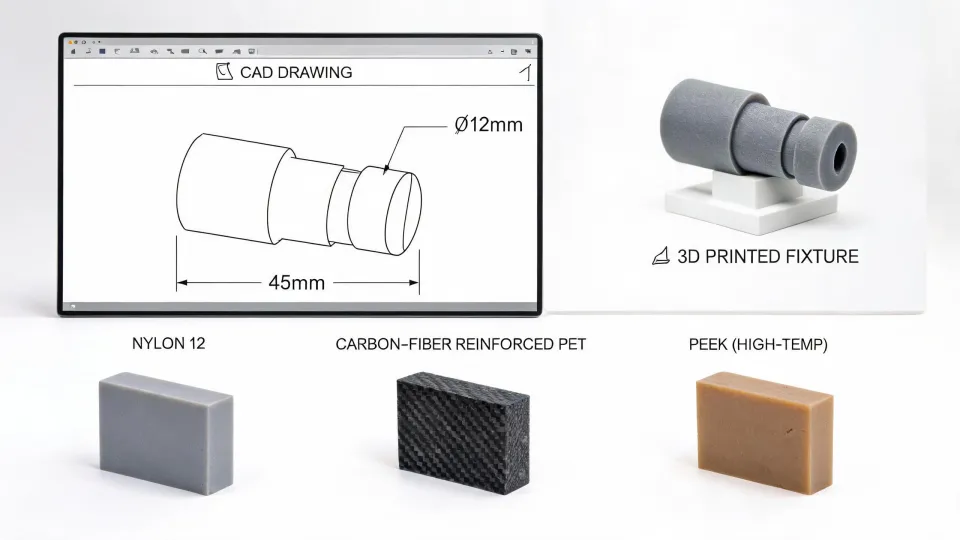
You'll often hear people ask “resin printer vs 3D printer” as if it's a one‑size‑fits-all question. It's not. Resin gives you insane surface detail, but most engineering resins are brittle and degrade under UV. For functional prototypes, production jigs, or end‑use parts that see heat or stress, FDM (and Ultimaker in particular) wins every time.
I've printed parts that hold up to 80°C in a manufacturing environment. Try that with standard resin. It won't last a week. So if you need strong, dimensionally accurate parts (and that's most B2B use cases), an Ultimaker S5 or S7 is the smarter buy.
The numbers: what the Ultimaker S5 actually costs (as of January 2025)
Pricing is the first thing everyone asks. Official Ultimaker pricing (check ultimaker.com for current rates) puts the S5 around $5,500–$6,000 depending on the bundle. But here's the kicker: with a two‑year warranty, free Cura updates, and a community of professional users who share settings, the cost per successful print is often lower than cheaper machines that waste time and filament.
Roughly speaking, I've calculated that my S5 pays for itself if I run it for about 300 hours of billable prints. With the cheap printer, I never reached that break‑even point because of failures.
“I don't have hard data on industry‑wide defect rates, but based on my experience with six different FDM printers, I'd say about 40% of first prints on budget machines need some rework. On the S5? Maybe 10%.”
Where the Ultimaker S5 doesn't fit
I'm not saying the S5 is for everyone. Here's where I'd suggest other options:
- Small prototypes under $50 budget – If you just need a one‑off visual model, a cheap FDM or even a resin printer could work. But don't expect it to run daily.
- Metal parts – The S5 prints plastic. If you need 17‑4 PH stainless steel parts, you're looking at laser cutting or metal AM (different market).
- Extremely high volume – For thousands of identical parts, injection molding beats any FDM printer. The S5 is for low‑to‑medium volume production.
And yes, I occasionally use a resin printer for jewelry‑like details. But for anything that goes into a machine or a product, it's the Ultimaker every time.
Final take: value over price, every time
In my opinion, the Ultimaker S5 is the best investment I made for our shop – precisely because it wasn't the cheapest. I learned that lesson the hard way. If you're making a buying decision, look at total cost: downtime, waste, support, software, and reliability. The cheapest printer is rarely the cheapest in the long haul.
That said, your situation might be different. If you're a hobbyist with one project a month, maybe the budget printer is fine. But if you're running a business, trust me: pay once, cry once.
