When the engineering team asked me to buy a 3D printer last year, I figured it was a two-hour decision. Read a few reviews, compare a few prices, file the purchase order. Two weeks later, I was knee-deep in a debate I hadn't even seen coming: resin vs filament. The team split into two camps, each convinced their technology was the "real" one.
I manage purchasing for a mid-sized product design company—roughly $400K in annual vendor spend—which means I'm used to translating between departments. Both camps used the same word, quality, and meant entirely different things. The resin side meant surface finish. The filament side meant strength. We briefly priced out fiber laser marking and cutting machines too, but the complex internal geometry the engineers were developing—hollow channels, lattice structures—made 3D printing the only practical route.
If you're asking which is better 3D printer resin or filament, you probably want a straight answer. The closest thing to one is: it depends on the parts you're making. But here's how I got from "opinions everywhere" to "signed purchase order," including the money math and the one thing I nearly got wrong.
The Price Tag Isn't the Real Cost
Let's talk money first. That's always question one.
Sticker prices range enormously across these two technologies. You can buy a solid resin printer for a few hundred dollars. A professional filament machine like the Ultimaker S5 lists around $6,000. The first time I saw that price tag, I closed the browser tab and said something unprofessional. The second time, I opened a spreadsheet. There's a pattern to how I handle bad news.
Resin runs roughly $50–80 per kilogram, based on supplier listings I checked in early 2025. Filament runs more like $20–60 per kilogram. But the material cost is just the start of the gap. Resin prints need isopropyl alcohol for washing, a UV curing station, gloves, and a plan for disposing of liquid waste. I'm not 100% sure of the exact per-part math, but when I sat down and listed everything, the tidy budget picture started looking less tidy.
Let me put some rough numbers on it. For the parts our engineers were printing, the average filament prototype cost around $3–8 in material. The same geometry in resin—counting resin, alcohol, gloves, and the occasional FEP film replacement—came out closer to $10–18 per part. Don't hold me to those exact figures; they shift with part size and supplier pricing. But the pattern was consistent. That's before factoring in the extra post-processing labor.
So the S5 wasn't cheap. But the first-year operating cost of the cheaper resin route, with all its consumables and safety requirements, ended up higher than the professional FDM setup we bought. That was my penny-wise, pound-foolish wake-up call. The purchase price is the smallest number on the invoice.
"Quality" Depends on What You're Actually Making
I owe half my team an apology here. I came into this process assuming resin was the premium option. Resin prints look incredible—smooth, glossy, with nearly invisible layer lines. They read as injection-molded up close. For custom jewelry, dental models, casting patterns, or display pieces, resin is the right answer, full stop.
But our team needed functional prototypes. Parts they could torque, drop, and break-test to learn whether a design would survive production. Resin parts are measurably more brittle than FDM parts, and they can soften or degrade with extended UV exposure. The pretty resin part snapped in testing; the "ugly" filament part with visible layer lines kept working. Guess which one the engineers wanted to iterate on.
The surprise wasn't that resin looks better. It was how little that mattered for our actual use case. Resin for aesthetics, filament for function—that's the honest breakdown. Specialty resins for tougher applications exist, but their pricing changes the conversation entirely.
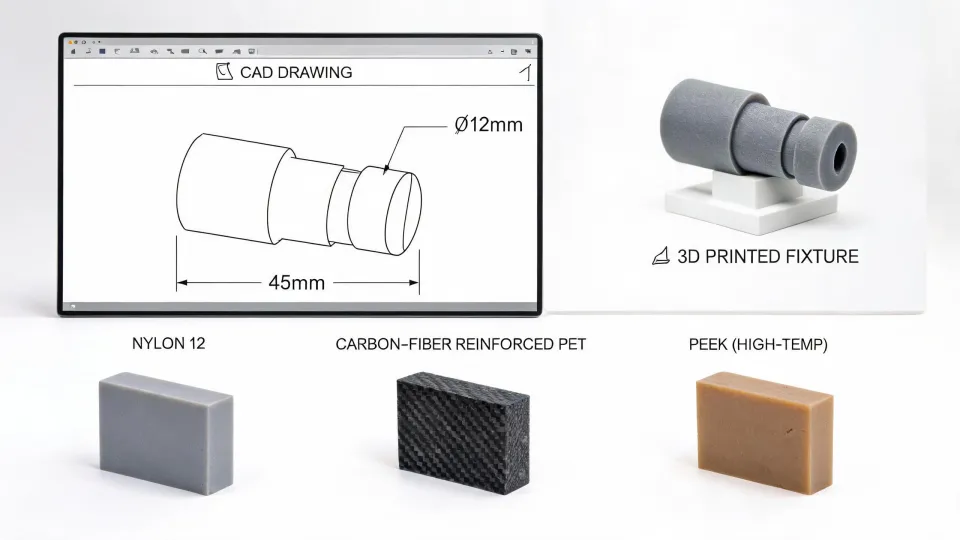
Material selection pushed me further toward filament. PET-G for chemical resistance, polycarbonate for heat tolerance, carbon-fiber composites for stiffness—the engineering material library for FDM is broader at accessible prices. Resin has specialty formulas too, but they sit in a different price bracket.
Workflow: What Marketing Pages Skip
Nobody tells you about the mess.
Resin printing is a chemistry-adjacent workflow. You handle liquid photopolymer, wash prints in alcohol baths, cure them under UV light, and manage chemical waste properly. In a dedicated workshop with trained staff, that's completely manageable. In the spare conference room we'd allocated, I mentally started drafting a safety policy and immediately felt tired.
Filament printing is cleaner. Solid spool goes in, nozzle melts it, part grows layer by layer. Maintenance is routine—nozzle swaps, bed cleaning, the occasional jam—but there's no solvent storage, no hazardous waste pickup, no glove inventory to monitor. When your building manager gets a say in equipment decisions, "clean" stops being a nice-to-have and becomes a feature.
The smell tipped it further. Resin often has a noticeable acrylic odor even with ventilation. Filament materials like PLA are relatively mild; you usually won't notice the printer is running at all. That matters when the print room is ten feet from the breakroom.
Software played a role too. Ultimaker Cura is free to download and comes with tested print profiles for their printers, which removes a chunk of guesswork. I'm not a 3D printing expert—I'm a buyer who reads too many manuals—but I had a print running on the S5 without opening a single support ticket. Ultimaker also offers a platform called Digital Factory for monitoring printers from a browser. We don't use it much with a single machine, but if the team scales up, it's good to know there's a path. On workflow alone, FDM won by a comfortable margin.
When It Breaks, Who Picks Up the Phone?
Every 3D printer needs service eventually. Worn nozzles, tired components, old cables. The question is what it feels like on your side of the purchase order when that day comes.
I called several companies we know that already run Ultimaker machines. One production manager was three years into an S5 with zero significant downtime—zero they couldn't resolve themselves within an hour, anyway. Another said replacement parts shipped quickly and support responded within a day. Compare that with the "we'll get back to you in 5–7 business days" I've experienced with other vendors, and the difference is obvious.
So glad I made those calls before signing. Buying for reliability is unglamorous—it's the more expensive option and somehow the more boring one. But a cheaper machine that fails at month six becomes a very expensive conversation with your CFO. The vendor relationship is part of the product. That's true in every category I buy for, and 3D printers are no exception.
Which Should Your Company Choose?
Here's the closest thing to a universal answer: it depends on the parts.
If your team needs functional prototypes, durable test parts, or engineering-grade materials, buy a filament printer first. The layer lines stop mattering once your parts stop shattering. The Ultimaker S5 was the right choice for us, but the category has other strong players—evaluate the ecosystem, support, and material range around whichever machine you're considering.
If you produce small, highly detailed objects—jewelry, casting patterns, dental appliances, display models—resin is usually the more sensible purchase, provided you have a proper workspace and ventilation setup. Don't let an FDM owner talk you out of a tool that matches your actual output.
What I'd avoid is picking based on the sticker price alone. The purchase price is the smallest part of the story. Ask what you're making, who's operating the machine, and what happens when it breaks. Answer those first, and the resin-or-filament question gets much easier.
Every office accumulates an expensive unused purchase at some point. I didn't want ours to be a 3D printer. The research took two weeks longer than I expected—or rather, two weeks longer than I budgeted for, which is a different thing entirely. But the machine has been running almost daily since we set it up, and the only complaint I've heard so far is that we need more filament colors. I'll take that trade-off.